







 SIMPL - School
Information Management Portal
SIMPL - School
Information Management Portal WINGS - Placement portal
 eNABLE - HR solution
 ALMA DRIVE - Alumni Portal


TABLE OF CONTENT
Contents
In today’s digital world, a strong online presence is essential for any business. On-page optimization is one of the most effective ways to improve your website’s visibility and rankings in search engines. It helps search engines understand your content and show it to the right people when they search for it.
This post covers the key elements of on-page SEO, why it matters, and how it can bring more traffic and growth to your business.
On page optimization
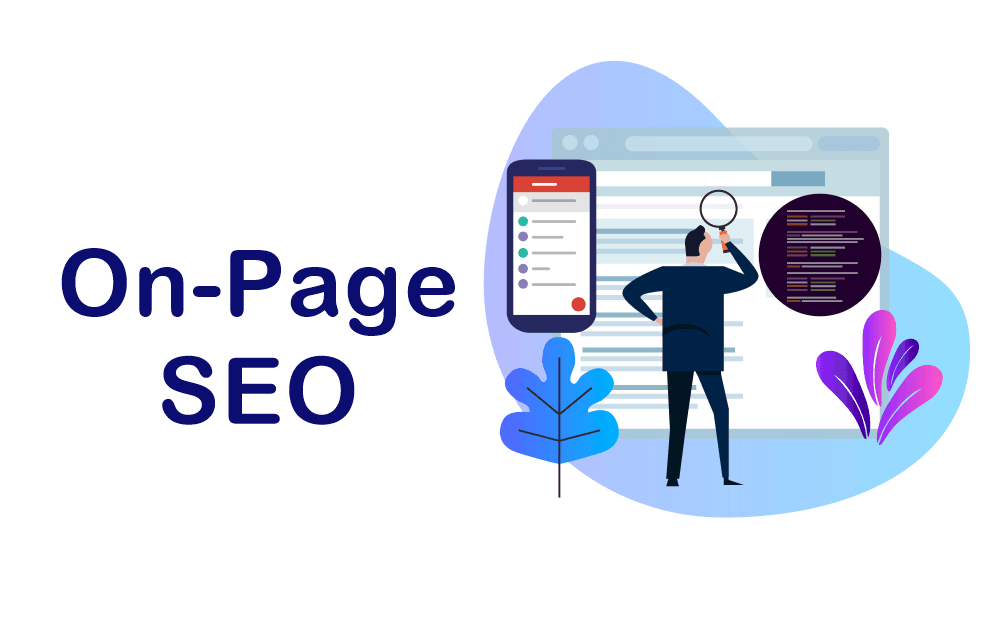
On page optimization enables handlers to make changes of the content, organization, and various attributes of your website in order to enable the site to rank with the search engines. It is the way of improving individual components of every of your web pages to allow search engines like Google to rank your site based on how they deem it beneficial to a user. This increases your chances of getting seen on search engine results, and hence you’re also able to capture more visitors and generate interested leads.
The main focus of On page optimization is on elements that you control yourself, such as meta tags, content, HTML tags, internal links, and user experience, unlike Off-page SEO which merely concerns linking to your website from outside pages.
Key Elements of On page optimization
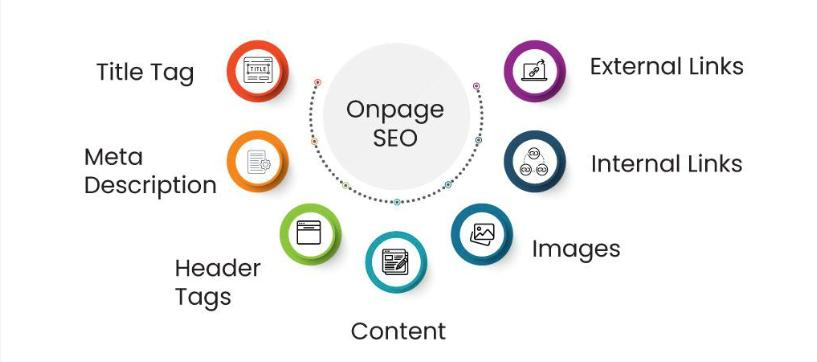
For your website to earn its rank, there will be several aspects to optimize. Here are some significant components on which we need to put focus as On page optimization is concerned:
1. Focus on E-E-A-T and people-first content
Google evaluates content on Experience, Expertise, Authoritativeness and Trustworthiness (E-E-A-T). To show these qualities:
- Write from real experience, with practical examples, case studies or insights.
- Add author names and short bios to your blog posts.
- Keep your information accurate, and update older posts regularly.
- Write for your readers first, not just for search engines.
Write for AI-powered search too
Search is no longer limited to a list of blue links. Google AI Overviews, ChatGPT and Perplexity now answer questions directly, often drawing from well-structured web pages. To increase your chances of being cited:
- Use clear headings and bullet points.
- Answer the main question clearly in the first two or three lines of a section.
- Add an FAQ section with short, direct answers.
2. Title Tags and Meta Descriptions
Meta descriptions don’t directly affect rankings, but a well-written one can improve your click-through rate, which means more visitors from the same position. Keep titles under about 60 characters and descriptions under about 155 characters so they display fully. Google may sometimes rewrite your snippet to better match a search, so make sure the page content itself is also clear.
3. Header Tags (H1, H2, H3)
These header tags – H1, H2, H3, etc. should be used to structure your content most effectively to increase the read rate by both the search engines and readers. They also offer signals to search engines regarding the continuity of your content.
H1 Tags: This is expected to be the main title of the page, which must clearly represent the focus of the content. It must further include your core keyword.
H2 and H3 Tags: These are subheadings that break your content into sections and thus make it easier to read. Similarly, relevant keywords should be inserted wherever they fit.
Correct optimization of header tags ensures a well-organized and user-friendly content thus improving the rank of your listing.
4. URL Structure
The URL structure of your web pages is yet another factor in On page optimization. URLs that are clean, concise, and rich with keywords allow search engines and users to comprehend what your page is about much better.
Keep URLs short and descriptive.
Use hyphens to separate words.
Include your primary keyword in the URL if possible.
It makes the location of the different pages easy and also enhances good user experience through proper enhancement of the URLs.
5. Internal Linking
Internal linking certainly constitutes On page optimization. Because of its usefulness in cyberspace, it allows search engines to access and understand further pages on your e-business website while keeping users on your website longer by directing them to other related content.
Utilize anchor text that contains keywords or phrases pertinent to the target page.
Link to valuable internal pages, thus elevating their ranking potential.
Ensure internal linking is logical and user-friendly.
Internal linking will strengthen the link between your web pages and make navigation through the whole site better.
6. Image Optimization.
Images improve the user experience and can help your website’s SEO. However, they must be appropriately optimized to avoid slowing down your page load time, which is a ranking consideration.
Use descriptive file names and alt text including relevant keywords.
Compress photos to minimize the file size and improve loading times.
Use responsive pictures to ensure proper display on all devices.
Optimizing your photos not only increases SEO but also provides a better user experience.
7. Mobile-First Optimization
Google uses mobile-first indexing, which means the mobile version of your website is the primary version it crawls and ranks. If your mobile site is slow, hard to use or missing content, your rankings can suffer on every device.
To optimize for mobile:
- Make sure mobile pages have the same content as desktop pages.
- Use a responsive design that adapts to all screen sizes.
- Make buttons and links easy to tap.
- Keep text readable without zooming.
8. Page Speed and Core Web Vitals
Fast websites rank better and keep visitors longer. Google measures user experience through Core Web Vitals:
- Largest Contentful Paint (LCP): how quickly the main content loads. Aim for under 2.5 seconds.
- Interaction to Next Paint (INP): how quickly the page responds when someone clicks or taps. Aim for under 200 milliseconds.
- Cumulative Layout Shift (CLS): how stable the page is while loading. Aim for a score under 0.1.
To improve your speed:
- Check your scores regularly with Google PageSpeed Insights..
- Compress and resize images and videos.
- Minify CSS, JavaScript and HTML.
- Use browser caching and a CDN.
- Improve server response time.
On page optimization: Its Importance
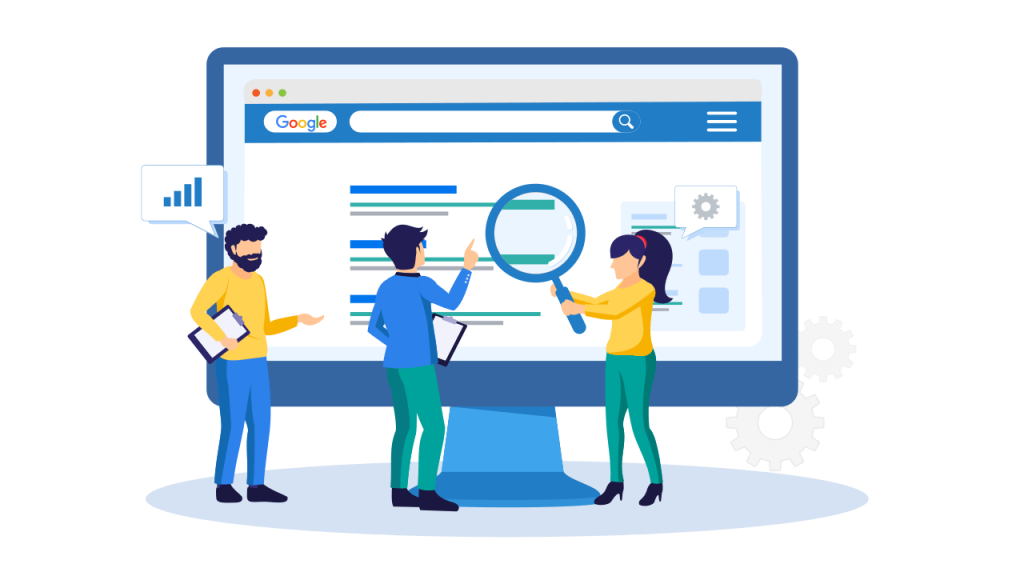
On page optimization is perhaps one of most important contributors to a path toward good eventual rating by search engines.
By optimizing every web page, it can: Enhance visibility on search engines, thus increasing traffic to your site; further create an experience worth keeping visitors longer; ensure incidences of visitor orders; and a serious course will always put the expected website higher into the competitive arena.
A well-optimized website ensures a competitive edge and keeps your business standing out in a cluster of competitors.
How Optimization of Websites Leads to Business Growth
On page optimization entails an important avenue for business growth, harvesting highly qualified traffic by way of search engine optimization.
Such qualified traffic leads to higher engagement, more leads, and ultimately increased revenue.The efficiency of On page optimization of a website is the factor that either keeps attracting new visitors to it or possibly gets lost in the realms of search engine results.
Furthermore, proper website optimization provides for a better user experience and builds trust and credibility in the minds of your target audience. This trust is vital in turning visitors into buyers and keeping the business running smoothly in the long term.
Conclusion
On page optimization remains one of the most important and significant forms of an SEO strategy influencing the user experience and search engine rankings of a given website. Each element that constitutes a website-from content optimization to speed of loading to being mobile-friendly-contributes to excellent performance which denotes a good rating.
At Swaragh, we specialized in assisting companies in achieving outstanding outcomes via skillfully implemented On page optimization tactics. We guarantee that your website ranks better, gets more traffic, and produces the best results possible with our experience and competitive Prices. Allow us to assist you in realizing the full potential of your website and generating significant development for your company.
GET IN TOUCH WITH
Swaragh for SEO Services
Frequently Asked Questions (FAQ’S)
What is On-Page Optimization in SEO?
On-page optimization refers to all actions taken directly on a webpage to improve its search engine rankings. This includes optimizing content, HTML tags, internal links, and more to make the page more search-engine friendly.
Why is On-Page Optimization important?
On-page optimization helps search engines understand your content and assess if it is relevant to users’ search queries. Proper on-page SEO can increase visibility, improve rankings, and drive organic traffic to your site.
What are some key elements of On-Page Optimization?
Key elements include title tags, meta descriptions, header tags (H1, H2, etc.), keyword usage, image alt text, internal linking, and ensuring high-quality, relevant content.
How do keywords impact On-Page Optimization?
Keywords help search engines determine what a page is about. Including target keywords in titles, headers, and body content helps ensure your page ranks for relevant searches, but overuse (keyword stuffing) can hurt SEO.
